The Land Sector and Removals Standard is Here and It Doesn’t Solve All Your Problems
That’s no excuse for inaction
By: Jeff Seale, Ph.D
Disclaimer: I was a member of the Land Sector and Removals Standard (LSRS) Technical Working Group.
It was an honor to work with so many dedicated experts to create the very first GHG accounting and reporting standard specifically for the land sector. Its publication is a monumental step forward in helping the food and agriculture build a more sustainable food system.
We did not set out to solve all of the problems of measuring, verifying, accounting, and reporting the GHG emissions and carbon removals for such a complex system as the land sector. In fact, when it became clear that creating a standard for both land management and forestry was such a monumental task, it was decided to build a separate standard for the forestry sector to be published later.
The important point is this: there is now a standard for corporates in the food and ag sector to guide program development for reducing their GHG emissions. Not knowing what to do is no longer an excuse for inaction.
Our Project Shed Inventory Methodology was developed using the draft Land Sector and Removals Guidance, as a starting point and we are pleased to see that our methodology aligns well with the Standard.
Much has already been written about the standard’s highlights, so I won’t repeat them all here. Instead, I’ll focus on several aspects that are particularly relevant to the food and agriculture sectors and how HabiTerre can help you work through these considerations.
Key Considerations for the Food and Agriculture Sector
Setting the appropriate inventory spatial boundary
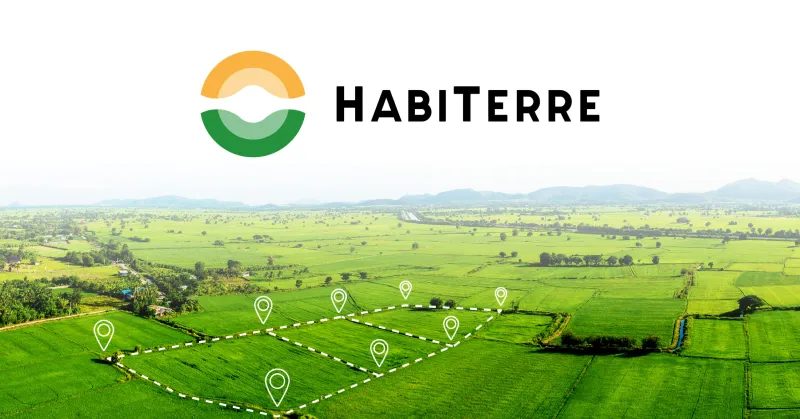
The spatial boundary you choose, whether global, jurisdictional, sourcing region, land management unit (LMU), or harvested area, depends on the level of traceability you have and impacts the kinds of claims for any carbon removals which you would like to make.
Our experts can help you set the appropriate spatial boundary for your project based on your level of traceability and desired claims.
Traceability
Physical traceability is required at the sourcing region, farm, or field level. It can be established through several chain-of-custody models, including:
- Identity preservation
- Segregation
- Controlled blending
- Mass balance
- A combination of these approaches
Book and claim is not allowed.
Our Project Shed Inventory Methodology supports the creation of credible emission factors that support a mass balance chain of custody model.
Data quality
Companies should use the highest quality data and methods that are practically available. They must also report on the data sources, methods, and assumptions used. Additionally, companies should follow the principle of conservativeness.
The HabiTerre Project Shed Inventory Methodology uses SYMFONI, our proprietary platform that integrates:
- The Tier 3 ecosys model
- Primary data
- Remote sensing observations
- Multiple observational constraints
Together, these components enable a robust estimation of emissions and removals while also supporting the uncertainty reporting required by the standard.
To further reduce operational burden, we have developed a Lite Data Collection Platform that simplifies primary data collection for farmers and program managers. It integrates with farm management systems and incorporates advanced gap-filling capabilities using remote sensing and machine learning.
Removals
The reporting of removals is voluntary. However, when removals are reported, traceability must extend at least to the sourcing region.
Removals must meet permanence requirements, meaning removals must be monitored in perpetuity. If monitoring ends, then reversals must be accounted for.
HabiTerre’s remote sensing capabilities are able to provide lower cost solutions to this monitoring requirement.
Soil sampling
Soil sampling will be required every 5 years whether for “true up” in the case of measurement methods, or recalibration for modeling approaches.
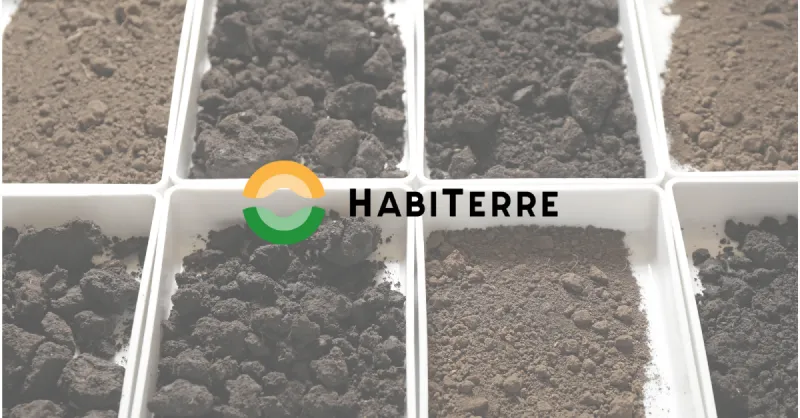
HabiTerre has developed soil stratification and sampling methodology to reduce cost and model uncertainty to support this requirement.
Good Standards Create Flexibility
Good standards are not overly prescriptive. Flexibility allows organizations to design programs that meet their specific needs, while creating desired impacts.
This is where the LSRS gets it right. We now have a set of guidelines that help us build out credible programs with impact.
At the same time, the vagueness in the standard can create uncertainty for developers that may lead to lower ambition or inaction as a way to avoid the risks of greenwashing.
This is exactly where the LSRS doesn’t solve all your problems.
Ultimately, it is up to all of us to use the LSRS to build programs that follow the letter of the standard where it makes sense. We believe that where the standard is less clear, creating a transparent, rigorous program that follows the spirit of the standard is a way to build programs at scale.
Where Things Get Messy and How It’s All Related to Removals
In our experience, much of the uncertainty around program design centers on how to report removals. Several of these issues discussed above intersect here.
This is also where HabiTerre can help organizations navigate the practical challenges.
Traceability challenges in complex supply chains
To report removals, a certain level of traceability is required. In complex agricultural supply chains, tracing a bushel of grain from a field or farm through multiple intermediaries can be extremely difficult.
The standard has allowed for flexibility here in allowing “impact traceability,” the reporting of removals outside of the physical inventory when there is physical traceability to a supply shed and impact at the LMU level.
This area remains an active topic of policy development. Habiterre is actively engaged in bringing clarity on this important topic to the sector and our partners.
Permanence requirements
The LSRS requires removals to meet the principle of permanence (requirement 3.2.2 in the standard). While this makes perfect physical sense to meet the goal of achieving net zero emissions, the impermanent nature of projects, corporate entities, land ownership, etc within the land management sector make this requirement incredibly difficult to achieve.
The standard partially addresses this by requiring that removals must be “monitored,” and if monitoring stops, then an emission or a reversal must be reported in the year that monitoring ceases.
Remote sensing offers a cost-effective way to monitor the continuation of regenerative ag practices that drive removals. HabiTerre’s SYMFONI platform is capable of providing this monitoring.
We are also exploring ways of tracking removals continuously at a project level in ways that may meet the spirit if not the letter of the standard. This will of course depend on the other requirements of traceability and level of claims. We believe that it can provide an even more economical way of monitoring for permanence. We will share more as we more fully develop the concept.
Soil sampling costs and uncertainty
The LSRS requires soil sampling to track carbon stock changes for removal claims. Sampling must be performed every five years for measurement approaches or to recalibrate models in model or remote sensing approaches.
However, the standard lacks specifics on exactly how soil sampling and measurement should be done and used, only requiring consistency in the approach.
Costs vary wildly across soil sampling and measurement approaches. Even at a level of sampling only 10% of a large project area, the costs quickly become potentially budget-busting.
To address this challenge, we have developed a soil stratification methodology to help decrease the uncertainty around reported removals while also attempting to lower costs for our partners. We believe that our approach using model-data fusion allows for more minimal soil sampling without decreasing the rigor and accuracy of estimated outcomes.
Moving Forward
The publication of the Land Sector and Removals Standard is a welcomed achievement in setting the guideposts for advancing a more sustainable food system.
While no standard is perfect, the LSRS is creating the space to build credible, scalable impacts within the food and ag value chain. At the same time, it is already stimulating new conversations that will produce innovations to solve some of the questions still unresolved by the standard.
The Greenhouse Gas Protocol plans to publish an implementation guide within the next few months that will further help project developers to better understand and apply the standard. While we are anxiously awaiting the implementation guide, we are already assisting our partners in program building.
We are grateful to all of the teams at the Greenhouse Gas Protocol for bringing the LSRS to the sector and look forward to continuing to work with all partners to implement and build upon this critical work.